




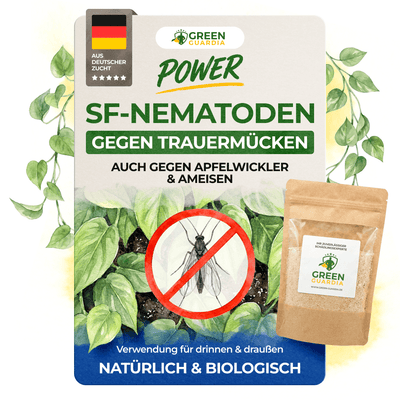

























Identify Slugs and Control Them with Nematodes
Holes in lettuce and seedlings that have disappeared overnight can indicate slug damage. Our nematodes against slugs offer a biological way to control suitable slugs in the soil area. Here you can find out why this solution fits and how you can combine it with further protective measures.
Recognizing slug damage: Which signs are typical?
Not every hole in a leaf comes from a slug. Therefore, check the feeding pattern, slime trails, and actual animals found together. Checking in the evening or after damp weather can help with the search.
- Irregular holes or eaten-away leaf edges.
- Heavily damaged seedlings and young plants.
- Shiny slime trails on plants or substrate.
- Slugs in the vicinity of freshly damaged plants.
Where do slugs cause problems?
Feeding damage to freshly sown or planted crops is particularly annoying. Small plants have little leaf mass and cannot compensate for a heavy loss as easily.
Check vegetable beds, raised beds, greenhouses, and planters. Also consider protected areas directly next to the affected plants.
What helps with acute slug damage?
- Check the cause: Search for slugs and fresh feeding marks.
- Protect sensitive plants: Use suitable mechanical barriers and check for gaps.
- Collect harmful slugs: Targeted removal of certain animals instead of treating all slugs across the board.
- Plan biological treatment: Check whether the existing species and stages match the nematode product.
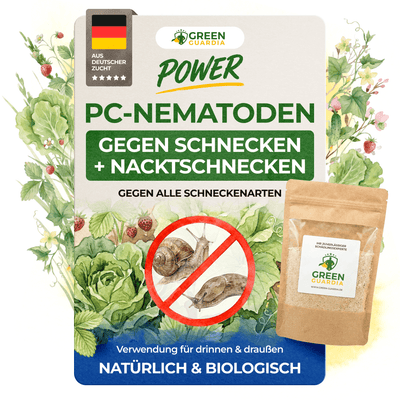
Our solution: Nematodes against slugs
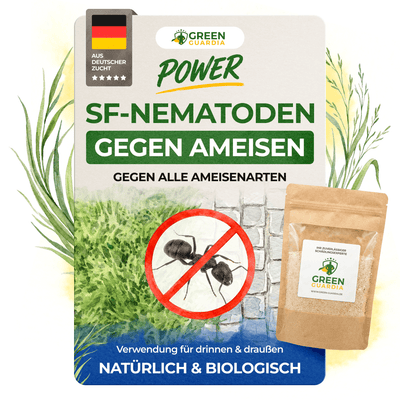
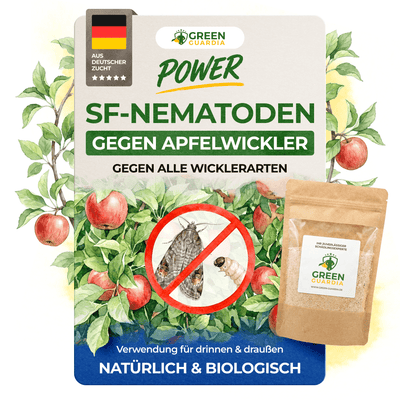
Our nematodes against slugs are living beneficial organisms for application in the soil area. They are stirred into water according to the instructions and distributed over the intended area.
Green Guardia Nematodes Against Slugs
Would you like to biologically control suitable slugs? Choose the right pack size and plan the application under suitable soil conditions.
- Application site: the intended soil area in the bed or planting zone.
- Application: with water according to product instructions.
- Pack selection: according to the area to be treated.
- Important: Observe slug species, developmental stage, and application requirements.
Why are nematodes against slugs useful?
Slug-pathogenic nematodes can infect suitable slugs. The treatment thus targets the animals that come into contact with the treated soil area.
This approach complements manual collection: You treat a defined area instead of exclusively targeting the animals currently visible. The prerequisite is that the product is suitable for the target slugs present.
What are the benefits of the application?
- Biological approach: Use of living antagonists.
- Practical application: Distribution with a water solution.
- Targeted planning: Treatment according to area and actual need.
What should you know before ordering?
Not all slug species and sizes react equally sensitively. Especially with large arion slugs you should not expect a generally reliable effect. Clarify the suitability of the specific product for your finding.
How much quantity do you need?
Measure the intended area in square meters. Then select the appropriate variant on our product page for nematodes against slugs . The current application recommendation applies to dosage and coverage.
Applying nematodes against slugs correctly
- Check prerequisites: Match target species, temperature range, and application conditions with the instructions.
- Prepare area: Pre-water dry soil according to instructions. Avoid waterlogging.
- Prepare mixture: Stir nematodes into the provided amount of water.
- Distribute evenly: Stir during application and treat the entire intended area.
- Maintain post-care: Water afterwards according to instructions and maintain soil moisture for the specified duration.
Also note the instructions on storage and shelf life. Order as closely as possible to the planned application date. Do not distribute a pack over more area than intended.
When should you treat?
Suitable target slugs and appropriate conditions are crucial, not a fixed calendar date. Plan the application early, before sensitive plants are severely damaged.
Combining nematodes with further measures
| Measure | Task | Important |
|---|---|---|
| Nematodes | Biologically control suitable slugs. | Observe species, stage, and instructions. |
| Collection | Directly capture visible harmful slugs. | Regular checks required. |
| Barriers | Make access to sensitive plants difficult. | Check for gaps and overhanging plant parts. |
| Observation | Discover new damage early. | Differentiate old feeding sites from new ones. |
How do you recognize an improvement?
Observe new feeding sites and the development of protected plants. Leaves that are already damaged will not be restored by the treatment. New immigration may make further checks necessary.
Frequently Asked Questions About Slugs and Nematodes
Why should I use nematodes against slugs?
They offer a biological treatment of suitable target slugs on the intended soil area. The application can complement collection and barriers.
Do nematodes work against every slug?
No. Sensitivity and treatment success differ according to species and stage. Check suitability based on current product details.
Can I reliably eliminate large arion slugs with them?
A reliable effect against all large arion slugs cannot be generally promised. Identify the animals and clarify product suitability.
How much nematode quantity should I order?
Measure the treatment area and select the corresponding variant on our product page . Observe the specified dosage.
Why must the soil remain moist?
Nematodes require moisture for their movement and activity. Observe post-care without permanently waterlogging the soil.
Do I still need to collect slugs?
That can be useful, especially with visible harmful slugs and new immigration. The treatment does not replace regular checks.
Can I use nematodes against other pests?
Not arbitrarily. Nematode products differ by species and area of application. Use a product intended for slugs.
Do chewed plants become healthy again?
That depends on the extent of the damage. Missing leaf parts do not grow back. The goal is to limit further feeding and enable new growth.