


































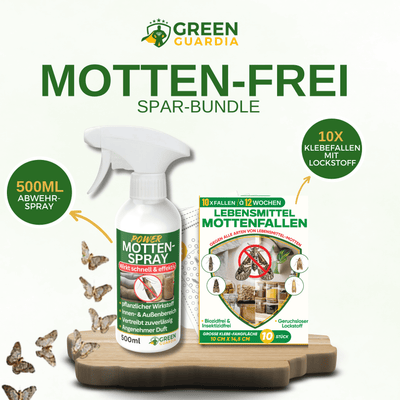


Number of traps


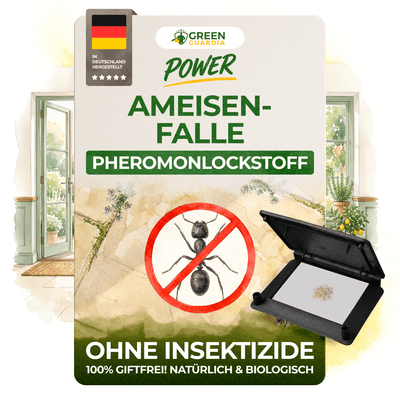
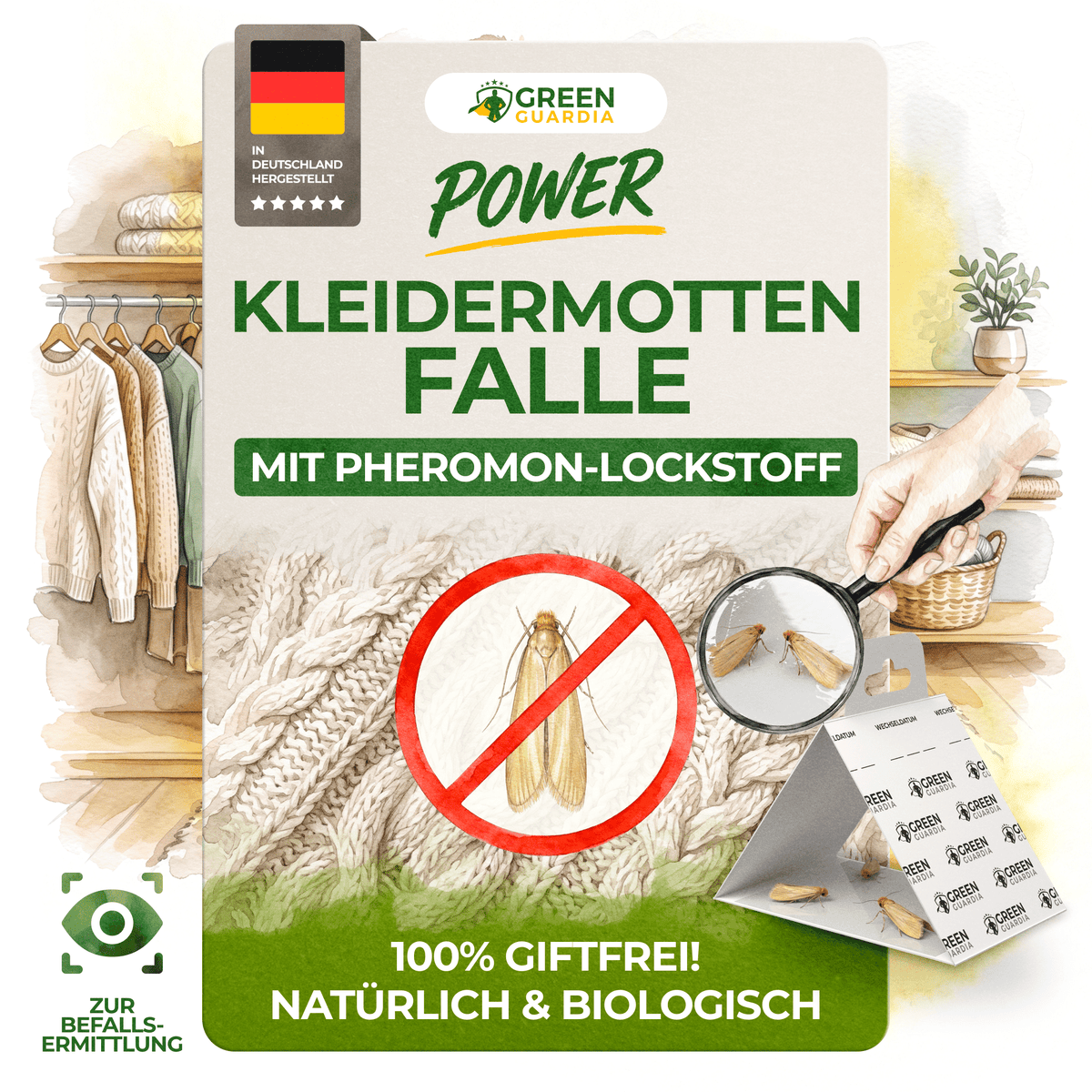
Clothes moth traps with pheromone lure
-
Works naturally – completely without chemicals
-
Freshly packed and reliably delivered
-
For a clean feeling on balconies and more.
-
Discreet to use – transparent & inconspicuous
-
Safe for children & pets
In stock - with you in 2-4 working days


Was unsere Kund*innen sagen
-
Wirksamkeit
kaum Fangerfolg vereinzelt fängt zuverlässig -
Anwendung
kompliziert mit etwas Aufwand schnell & problemlos -
Lieferqualität
beschädigt leicht verbogen sofort einsatzbereit
Lieferoption wählen & clever sparen:


Choose options
-
Works naturally – completely without chemicals
-
Freshly packed and reliably delivered
-
For a clean feeling on balconies and more.
-
Discreet to use – transparent & inconspicuous
-
Safe for children & pets
In stock - with you in 2-4 working days
Lieferoption wählen & clever sparen:
-
Works naturally – completely without chemicals
-
Freshly packed and reliably delivered
-
For a clean feeling on balconies and more.
-
Discreet to use – transparent & inconspicuous
-
Safe for children & pets
In stock - with you in 2-4 working days
Lieferoption wählen & clever sparen:
Pheromone sticky traps for clothes moths – odorless, insecticide-free & effective
Clothes moths are unwelcome guests in wardrobes, drawers, and textile storage areas. Their larvae, in particular, can cause significant damage to clothing, carpets, and other textiles made from natural fibers like wool, cashmere, or silk. Our pheromone sticky traps for clothes moths provide a simple and reliable way to detect an infestation early and specifically monitor moth activity.
The traps contain a specially developed pheromone lure that specifically attracts male clothes moths. The lure mimics the natural sexual pheromone of female clothes moths, attracting the males to the sticky surface where they become trapped. This helps reduce reproduction and contain the further spread of an infestation. The traps work completely without insecticides and are odorless for humans.
Benefits of our pheromone traps
- No insecticides: Targeted attraction using pheromones and a sticky surface – without toxic insecticides
- Odorless & unobtrusive: Ideal for wardrobes, bedrooms, dressing rooms, and textile storage
- Easy to use: Simply unpack, remove the protective film, and place the trap in the desired location
- Early detection: Ideal for monitoring infestations and controlling moth activity
- Targeted attraction: Special pheromone lure attracts male clothes moths
- Long-lasting effect: A trap remains active for up to 3 months
💡 Important to know:
Pheromone traps are ideal for the early detection and monitoring of a clothes moth infestation. Since they only attract male moths, existing eggs and larvae cannot be eliminated. Therefore, sticky traps alone are usually not sufficient for an existing infestation.
🐝 Our recommendation: Trichogramma wasps against clothes moths!
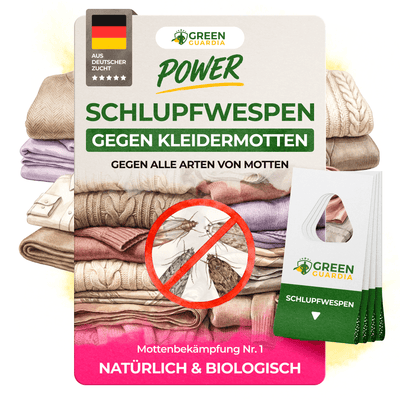
For targeted and natural control, we recommend the use of Trichogramma wasps against clothes moths. These tiny beneficial insects, which are harmless to humans and pets, track down clothes moth eggs and lay their own eggs inside them. This prevents new clothes moths from developing from the infested moth eggs. The breeding cycle is interrupted in a natural way – without any chemical insecticides.
The ideal combination: While pheromone traps attract male clothes moths and make the infestation visible, Trichogramma wasps target the moth eggs directly and prevent the next generation from developing. This way, both methods complement each other perfectly and help to contain a clothes moth infestation sustainably.
Our tip: Use Trichogramma wasps over several weeks according to the application plan to ensure newly laid moth eggs are also covered. Additionally, check affected textiles and clean them thoroughly, as Trichogramma wasps do not combat existing larvae or pupae.
🔍 Pest identification – free service:
Are you unsure whether you are dealing with clothes moths, pantry moths, or other pests?
✔️ Photograph the insect and send us the picture by email.
✔️ We will analyze it for free and give you suitable recommendations for control.
Anwendung der Pheromon-Klebefallen gegen Kleidermotten – einfach & effektiv
Unsere Pheromon-Klebefallen gegen Kleidermotten lassen sich schnell und unkompliziert anwenden. Ob im Kleiderschrank, in der Ankleide oder im Schlafzimmer – mit nur wenigen Handgriffen ist die Falle einsatzbereit. Der integrierte Pheromon-Lockstoff zieht gezielt männliche Kleidermotten an, die anschließend auf der Klebefläche haften bleiben. So kannst du einen möglichen Befall frühzeitig erkennen und die Mottenaktivität zuverlässig überwachen.
1. Schutzfolie abziehen 🖐️
- Die Schutzfolie vollständig von der Klebefläche abziehen, um den integrierten Pheromon-Lockstoff freizulegen.
- Die Klebefläche möglichst nicht mit den Fingern berühren.
2. Falle zum Dreieck falten 📐
- Die Falle entlang der vorgegebenen Faltlinien zu einem Dreieck zusammenfalten.
- Darauf achten, dass die Klebefläche nach innen zeigt.
- Die Falle entsprechend der vorgesehenen Steckverbindungen fixieren, sodass sie stabil steht oder aufgehängt werden kann.
3. Im Kleiderschrank aufhängen oder aufstellen 👕
- Die fertig gefaltete Falle im Kleiderschrank aufhängen oder auf einer ebenen Fläche aufstellen.
- Besonders geeignet sind Kleiderschränke, Ankleidezimmer, Schubladenbereiche und Aufbewahrungsorte für Textilien.
- Die Falle möglichst in der Nähe gefährdeter Kleidungsstücke aus Wolle, Kaschmir, Seide oder anderen tierischen Naturfasern platzieren.
- Darauf achten, dass die Klebefläche nicht direkt mit Kleidung oder anderen Gegenständen in Berührung kommt.
4. Regelmäßig prüfen und nach 12 Wochen wechseln 👀
- Die Falle regelmäßig auf gefangene Kleidermotten kontrollieren.
- Der Pheromon-Lockstoff zieht gezielt männliche Kleidermotten an, die auf der Klebefläche haften bleiben.
- Anhand der gefangenen Motten lässt sich die Mottenaktivität beobachten und ein möglicher Befall frühzeitig erkennen.
- Die Falle spätestens nach 12 Wochen austauschen, um eine zuverlässige Überwachung sicherzustellen.
- Bei stark belegter oder verschmutzter Klebefläche die Falle bereits früher ersetzen.
Kleidermotten – alles über den unsichtbaren Schädling im Kleiderschrank
Kleidermotten (Tineola bisselliella) gehören zu den bekanntesten Textilschädlingen in deutschen Haushalten. Die kleinen, unscheinbaren Falter sind besonders in Kleiderschränken, Schlafzimmern, Ankleidezimmern und Textillagern anzutreffen. Obwohl erwachsene Kleidermotten selbst keine Kleidung fressen, können ihre Larven erhebliche Schäden an wertvollen Textilien verursachen. Besonders gefährdet sind Materialien tierischen Ursprungs wie Wolle, Kaschmir, Seide, Pelze und Federn.
🔍 Wie erkennt man Kleidermotten?
Erwachsene Kleidermotten sind etwa 6 bis 9 mm lang und besitzen eine Flügelspannweite von ungefähr 12 bis 16 mm. Ihre schmalen Flügel sind meist gleichmäßig strohgelb bis goldfarben und haben einen leicht seidigen Glanz. Anders als viele andere Mottenarten besitzen Kleidermotten normalerweise keine auffälligen Muster oder dunklen Flecken auf den Vorderflügeln.
Kleidermotten sind lichtscheu und bevorzugen dunkle, ruhige Bereiche. Sie halten sich häufig in Schränken, unter Möbeln oder zwischen selten bewegten Textilien auf. Statt längere Strecken zu fliegen, laufen sie oft über Oberflächen oder verstecken sich zwischen Kleidungsstücken.
🐛 Warum fressen Kleidermotten Kleidung?
Nicht die erwachsenen Motten, sondern ausschließlich ihre Larven verursachen die typischen Fraßschäden. Die kleinen, cremeweißen Raupen besitzen einen bräunlichen Kopf und ernähren sich vor allem von keratinhaltigen Materialien. Keratin ist ein natürliches Strukturprotein, das beispielsweise in Tierhaaren, Wolle, Fell und Federn vorkommt.
Besonders beliebt sind Wollpullover, Kaschmirschals, Wollteppiche, Pelze, Polstermöbel und Textilien mit tierischen Fasern. Auch verschmutzte Stoffe können attraktiv sein, da Schweiß, Hautschuppen und andere organische Rückstände zusätzliche Nährstoffe liefern. Reine Baumwolle oder synthetische Fasern sind normalerweise keine geeignete Hauptnahrung, können bei Verschmutzung oder in Mischgeweben jedoch ebenfalls betroffen sein.
🥚 Wie vermehren sich Kleidermotten?
Weibliche Kleidermotten legen im Laufe ihres Lebens häufig etwa 40 bis 100 winzige Eier direkt an geeigneten Textilien ab. Die Eier sind weißlich, kaum sichtbar und befinden sich bevorzugt an geschützten Stellen zwischen Stofffasern, in Falten oder Nähten.
Unter günstigen Bedingungen schlüpfen nach ungefähr 4 bis 10 Tagen die ersten Larven. Diese beginnen anschließend, sich von den umliegenden Materialien zu ernähren. Die Larvenentwicklung kann je nach Temperatur, Luftfeuchtigkeit und Nahrungsangebot mehrere Wochen bis viele Monate dauern.
Nach Abschluss ihrer Entwicklung verpuppen sich die Larven in einem schützenden Gespinst. Daraus schlüpfen schließlich die erwachsenen Kleidermotten, die sich erneut paaren und Eier ablegen können. In beheizten Wohnräumen ist eine Entwicklung grundsätzlich ganzjährig möglich.
👕 Welche Schäden verursachen Kleidermotten?
Ein Kleidermottenbefall bleibt häufig lange unentdeckt, da die Larven bevorzugt an versteckten Stellen fressen. Typische Schäden und Befallsanzeichen sind:
- Unregelmäßige Fraßlöcher: Kleine bis größere Löcher in Wollpullovern, Schals und anderen Naturtextilien
- Ausgedünnte Stoffbereiche: Beschädigte Fasern und kahle Stellen, besonders bei Teppichen und Wollstoffen
- Feine Gespinste: Seidenartige Fäden oder kleine Gespinströhren zwischen den Textilfasern
- Larven und Puppenhüllen: Kleine cremefarbene Raupen oder zurückgebliebene Häutungsreste
- Versteckte Schäden: Fraßspuren an Nähten, Kragen, unter Teppichen oder in selten bewegten Kleidungsstücken
🏠 Wo verstecken sich Kleidermotten besonders gerne?
Kleidermotten bevorzugen dunkle, ungestörte und geschützte Bereiche, in denen ihre Larven ausreichend Nahrung finden. Häufige Verstecke sind:
- Kleiderschränke mit selten getragener Kleidung
- Schubladen und Aufbewahrungsboxen mit Wolltextilien
- Teppiche, insbesondere unter Möbeln und an wenig betretenen Stellen
- Polstermöbel mit tierischen Naturfasern
- Dachböden, Abstellräume und Textillager
- Ritzen, Falten und Nähte von Textilien
🌡️ Welche Bedingungen begünstigen Kleidermotten?
Kleidermotten entwickeln sich besonders gut in warmen, geschützten und wenig gestörten Bereichen. Günstige Temperaturen, eine ausreichende Luftfeuchtigkeit und geeignete Nahrungsquellen können ihre Entwicklung beschleunigen. In beheizten Wohnungen finden sie häufig über das gesamte Jahr passende Lebensbedingungen.
Besonders selten bewegte oder längere Zeit gelagerte Textilien sind gefährdet. Da die Larven lichtscheu leben und sich in Gespinsten verstecken, kann sich ein Befall über längere Zeit entwickeln, bevor sichtbare Schäden auftreten.
💡 Wusstest du schon?
Erwachsene Kleidermotten nehmen normalerweise keine Nahrung mehr auf. Ihre Hauptaufgabe besteht darin, sich zu paaren und für Nachwuchs zu sorgen. Die eigentlichen Textilschäden entstehen ausschließlich während des Larvenstadiums. Eine einzelne weibliche Kleidermotte kann zahlreiche Eier ablegen, aus denen sich bei günstigen Bedingungen viele hungrige Larven entwickeln.
Besonders tückisch: Kleidermotten benötigen kein offenes Fenster, um in eine Wohnung zu gelangen. Sie können auch unbemerkt mit bereits befallenen Kleidungsstücken, gebrauchten Teppichen, Polstermöbeln oder anderen Textilien eingeschleppt werden.

GREEN GUARDIA vs. other providers
What sets us apart from the rest

|

|

Produkte für Haus, Garten & tiernahe Bereiche |

Unklare Produktinfos |

Nützlinge aus deutscher Zucht |
Unklare Herkunftsangaben |

Praxisnah entwickelt |
Komplizierte Auswahl |

Klare Anwendungshinweise |
Wenig Anwendungshinweise |

Frisch abgefüllt bzw. sorgfältig verpackt |
Längere Lager- oder Lieferzeiten möglich |

German breeding
Beneficial insects from controlled German breeding – quality you can rely on

Expert advice
Application tips and support from our experts – targeted and effective.

Fast help
Our beneficial insects are ready for immediate use and help specifically with acute infestations in the house or garden.

Natural & safe
Safe in everyday life – use is absolutely risk-free for children, pets & plants.


We let our customers do the talking.

Natural pest control
At GREEN GUARDIA you will find the right natural solution for every pest problem – completely without chemicals.
Whether trichogramma wasps against moths, predatory mites against spider mites, or nematodes against fungus gnats and slugs – our beneficial insects provide reliable help in the house, garden, or greenhouse.
As a specialist for biological pest control, we stand for quality, innovation, and a sustainable impact – in harmony with nature, people, and animals.

Expert advice – Personal & practical
Our expert consultants support you with targeted application tips and many years of experience in natural pest control. Whether you have questions about application, combining different beneficial insects, or selecting the right product – we will help you quickly and competently.
FAQ Moth traps
Do you have questions about our products, application, or shipping? Here you can find the most important answers at a glance. If anything remains unclear, please feel free to contact us!

The traps contain a special lure that attracts male moths of the respective target species. They get stuck on the adhesive surface. This makes it possible to detect and monitor an infestation.
Food moth traps are intended for specific moth species in pantries. Clothes moth traps serve for infestation control in textiles. Since the lures are tailored to different moth species, the traps are not interchangeable.
No. Pheromone traps lure male moths. Existing eggs, larvae, and pupae are not caught by them.
No. The traps help with infestation monitoring. Additionally, infested food or textiles must be checked and appropriate cleaning and control measures must be carried out.
Yes, for early infestation detection. However, the traps do not prevent moths from being introduced or laying eggs.
Yes, they are excellent for early detection and prevention – especially at windows, light sources, or near plants.
Remove the trap from the packaging and remove the protective paper according to the instructions for use. Fold or attach it as indicated and note the setup date. Try not to touch the adhesive surface.
In the places suitable according to the instructions for use in the kitchen, pantry, or storage room. Avoid direct contact of the adhesive surface with food as well as damp or heavily soiled locations.
Near endangered textiles, for example in the wardrobe or dressing room. Choose a quiet, draft-free location and observe the notes on placement height and distance on the packaging.
This depends on the product as well as the size and layout of the application area. Follow the manufacturer's instructions regarding the number per room or cupboard. More traps do not automatically mean better infestation monitoring.
Check them regularly, for example once a week. Note new catches and, in the event of an infestation, also check the surrounding supplies or textiles.
The effective period depends on the product. Replace the trap no later than the time indicated on the packaging – even if the adhesive surface still looks clear.
If the adhesive surface is heavily covered with moths, dust, or fibers, has been damaged, or no longer adheres sufficiently.
The shelf life date, if any, indicated on the trap is the deciding factor.
Keep them according to the packaging instructions, usually in a cool, dry place protected from direct sunlight. Leave the protective cover on the adhesive surface until application.
Standard disposable adhesive traps are not designed for this. Do not clean or spray the adhesive surface; replace the trap according to the instructions for use instead.
It may be a different species of moth, female individuals, or an unsuitable location. Also check whether the trap was activated correctly and its effective period has not yet expired.
No. Eggs, larvae, pupae, and female moths are not caught. Therefore, additionally check food for webbing and larvae as well as textiles for feeding damage.
For food moths: check supplies including pet food, dispose of infested products, and clean cupboards thoroughly. For clothes moths: examine textiles, treat according to care instructions, and vacuum cupboards including cracks carefully.
Store dry food in tightly sealed containers and check new supplies. Keep endangered textiles clean and well protected. Regularly check cupboards and rarely used areas.
Our adhesive traps can be disposed of in the residual waste.


